
Blogs
Cushon Master Trust vs deforestation
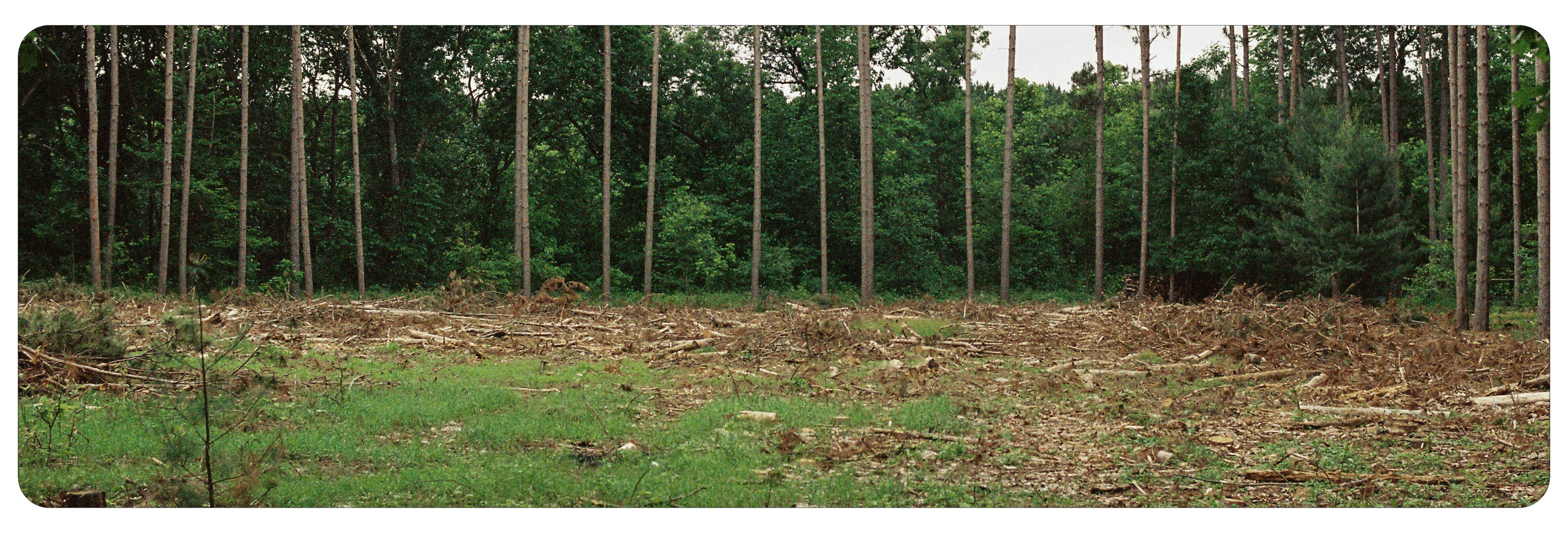
Forests are a critical piece of the global ecosystem, covering about 31% of Earth's land area and playing a vital role in maintaining environmental stability. They act as the planet's lungs, absorbing approximately 2.6 billion tons of carbon dioxide annually, helping to regulate climate and mitigate global warming.

Published on 17th October 2024
|
4 min read
Forests are home to over 80% of terrestrial biodiversity, providing habitats for countless species of plants, animals, and microorganisms. They also support human livelihoods, offering food, medicine, and resources for more than 1.6 billion people worldwide. [¹]
Deforestation poses not only a significant threat to the environment but also a substantial financial risk. Recent analysis has revealed that deforestation could become the "new coal" in the portfolios of financial institutions, as involvement with companies contributing to it carries significant financial, regulatory, and reputational risks.
As the climate and nature transitions accelerate, along with impending policy and market demand changes, 40 of the largest global food and agriculture companies—collectively valued at over USD $2 trillion—could lose up to 26% of their value by 2030.
The sector is projected to face an average decline of over 7%, equivalent to USD $150 billion in losses for financial institutions. This would represent a permanent, non-cyclical loss on a scale comparable to the 2008 financial crisis. Despite the significant risks deforestation brings, mitigation is believed to be relatively low in cost compared to the potential financial impact. [²]
Cushon Master Trust’s journey to tackling deforestation
In 2023 the Cushon Master Trust (MT) outlined the three key components to an effective deforestation journey, all of which we endeavour to work on in tandem. Here’s an update of how we are considering these components:
1. Measurement: Investigate our impact on and exposure to deforestation risks
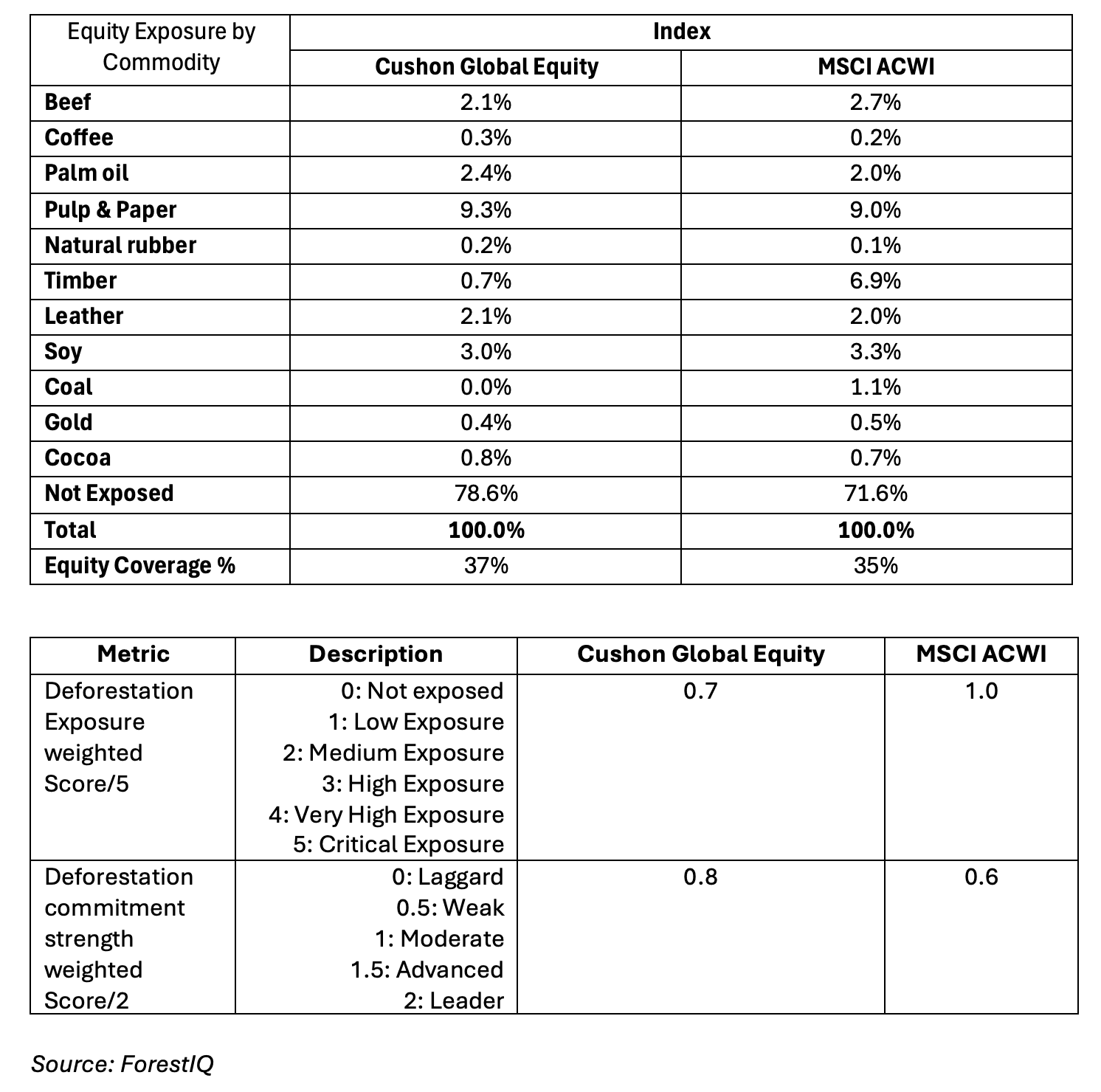
Analysis of our investee companies to identify and monitor the number of companies that (1) are exposed to deforestation, and (2) have a commitment to tackling deforestation. We have also broken down our exposure by commodity. Just four commodities—beef, soy, palm oil, and wood products—drive over half of the world’s tropical deforestation, so it is essential to measure our exposure to each since different commodities pose varying levels of risks to both the planet and to portfolios.
As a benchmark, we compare our custom climate-aware equity index against the global equity index (MSCI ACWI). For a summary of our findings, see appendix A1.
While it’s a good start, there are still many limitations to this approach. We believe the deforestation data and scores that are available lack robustness and accuracy cannot be determined easily. As more established reporting methods become available we hope to develop our analysis further.
2. Reduce exposure: Adjust our investments to reduce our impact and exposure
We intend to use biodiversity data providers to dig into and try to reduce our deforestation exposure. Based on the findings, we may also explore reallocating assets.
Ultimately, the collective commitment from companies towards deforestation is unfortunately relatively poor. This limits the impact we have in reducing our exposure to deforestation whilst it is still a wider structural issue, without impacting the diversification of our portfolio.
Engaging Despite this, engagement withwith investee companies will also be key to reduce our impact and exposure. Biodiversity is becoming increasingly important as an engagement topic and investment theme and we have adopted “Biodiversity Risk and Management” as one of our stewardship priorities.
We recognise that a sustainable environment relies on adequate forestation, and that ultimately sound deforestation policies contribute to our members having a healthy world to retire into. We believe that we should both minimise our deforestation impact and seek productive reforestation opportunities.
Marc Barnett, Head of Investment at Cushon
3. Positive impact: Target a positive impact through reforestation and afforestation
Now for the really interesting stage, full of potential for both diversified investment returns and environmental impact. This is where we switch focus from minimising harm to positive afforestation.
Our portfolio has a 15% target allocation to private markets via the Schroders Climate+ fund, which itself has a 10-25% target allocation to natural capital, including soil, water and forests. The fund is currently in ramp up phase, so we expect the first investment into Natural Capital in 2025.
The Cushon MT Trustees are actively considering a further allocation to Natural Capital to sit within the 15% private market allocation , which would increase the exposure our members have to financing reforestation and afforestation projects both closer to home in the UK and around the globe.
From these allocations, we expect to measure our positive contribution to afforestation / reforestation.
Together with employer and employee pension contributions, acting collectively through their Cushon workplace pensions, we will endeavour to make a difference to deforestation and limit the financial risk of deforestation on our member’s portfolios. We strive for better outcomes for the environment and better outcomes for pension savers.
Watch this space for updates and further insights about the Cushon Master Trust Sustainable Investment Strategy.
Appendix
You may also like...

Blogs
Cushon Master Trust’s Consideration of Climate Risk
Cushon Master Trust Trustees
Investment impact
Putting money where it's fit for the future
Unless you make your own investment decisions, your pension savings will be invested according to our Cushon Sustainable Investment Strategy. This uses many different types of investments, to give your money the opportunity to grow over the long term.
Cushon

Blogs
US trade tariffs and what it means for your money
Cushon
Investment impact
Growing low-carbon veg in the UK
Your pension savings are helping to grow fresh food closer to home, using energy that would otherwise go to waste.
Cushon